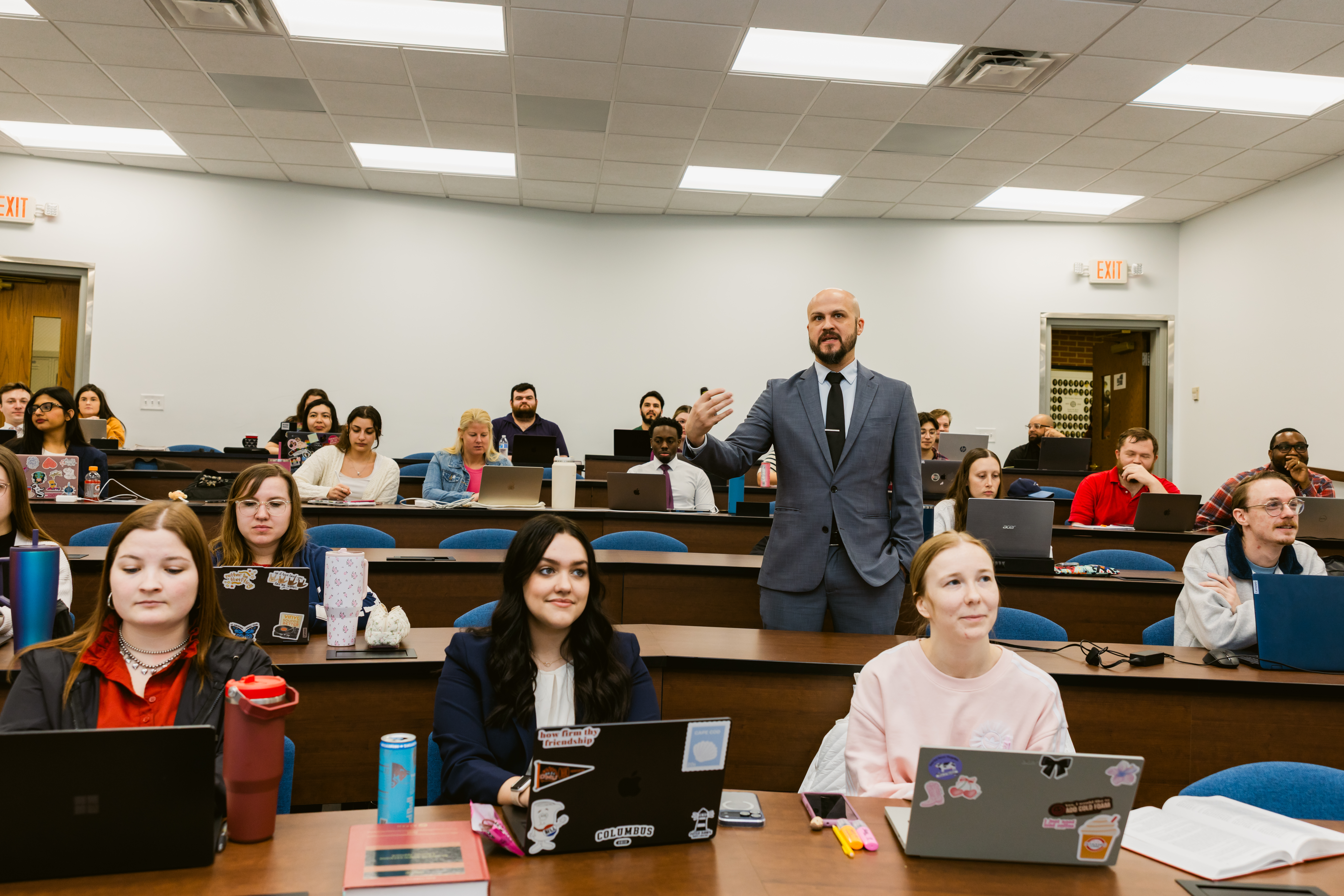
Artificial intelligence is transforming the legal profession, and Ohio Northern University Pettit College of Law is ensuring its graduates are ready to thrive in that future. By integrating AI into the curriculum while reinforcing the foundational skills of legal reading, writing, research, and analysis, ONU Law is preparing students to use emerging technologies effectively—and to know when independent professional judgment matters most.
According to Ohio’s 2026 Ethics Guide to Artificial Intelligence for Lawyers and Judicial Officers, AI-enabled platforms can streamline legal research, contract drafting, discovery, and document review. When used ethically, these tools allow lawyers to devote more time to client counseling, strategic decision-making, and the exercise of independent professional judgment.
At ONU Law, students learn to maximize the benefits of AI while understanding its limitations. They are trained to use AI responsibly to improve efficiency, enhance client communication, safeguard confidentiality, and support ethical legal practice. Just as importantly, they learn how to critically evaluate AI-generated work and recognize when human judgment must prevail.
The College of Law has taken a proactive approach to faculty development in this rapidly evolving area. Over the past several years, ONU has invested in faculty attendance at AI-focused conferences and supported internal workshops and training sessions exploring the opportunities and challenges AI presents both inside and outside the classroom.
While embracing innovation, ONU Law remains committed to ensuring students develop the core competencies that define excellent lawyers. Faculty have renewed their emphasis on in-class, closed-book assessments and, in some cases, reduced reliance on laptops during class sessions. These measures help students strengthen the foundational skills of case reading, note-taking, legal research, analytical writing, synthesis, memorization, and critical thinking.
Beginning in the first year and continuing throughout law school, students encounter AI through dedicated workshops and integrated classroom experiences that expose them to a growing range of legal technologies and practical applications.
- The Taggart Law Library’s Dustin Johnston-Green and Bridget Buckley introduce students to AI-assisted legal research through workshops and advanced coursework.
- Professor Dan Mauer uses AI-generated simulations in White Collar Crime, placing students in realistic compliance and counseling roles.
- Professor Melissa Kidder allows students to use AI for drafting and peer review while teaching them to critically evaluate AI-generated content.
- Professor Garrett Halydier incorporates AI into drafting and exam exercises, challenging students to outperform AI-generated work.
- Professor Rick Bales integrates AI into Employment Law, Labor Law, and Arbitration through client counseling and negotiation simulations.
Across the curriculum, ONU Law is blending AI literacy with foundational legal skills to prepare students for the evolving legal profession.